
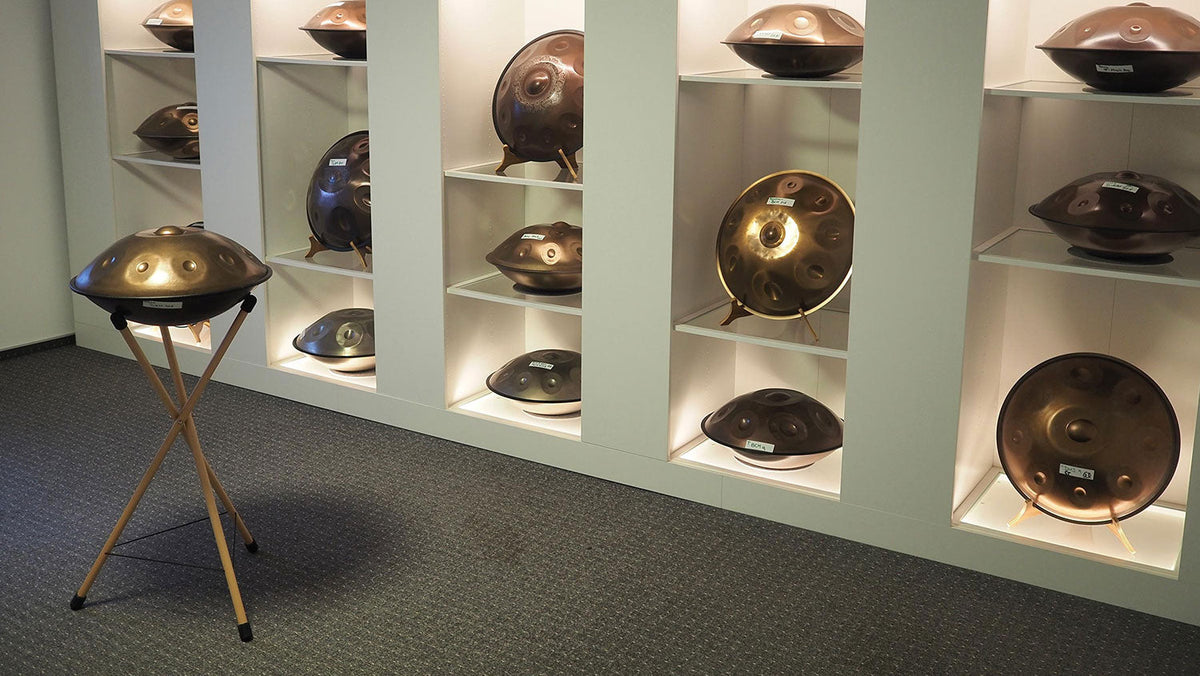
Guide to handpans and how to choose one
Here's everything you need to know before buying your first handpan: technical criteria, budget, mistakes to avoid, and long-term purchasing strategy.

Table of contents
Choosing your first handpan can be an exciting, but often confusing, experience. With so many materials, scales, sizes, price differences, and a wide variety of manufacturers, a beginner can quickly feel lost. This handpan buying guide has been created specifically to help you find your first handpan. It brings together all the essential criteria to help you make a confident, consistent choice that's right for your personal project.
The idea is not to learn everything at once, but to understand the fundamental concepts, the most common mistakes to avoid, and the important aspects to consider. This guide is designed as a dashboard: for each fundamental concept, you will find a reference to a more detailed section where you can learn more according to your needs.
Before purchasing: Familiarise yourself with the handpan and clearly define your musical project
The handpan is a relatively new instrument, born from the development of the Hang® in the early 2000s. It is not a snare drum, a classic percussion instrument, nor a steel tongue drum. You can read the article on the origin of the handpan for more details.
What is a handpan?
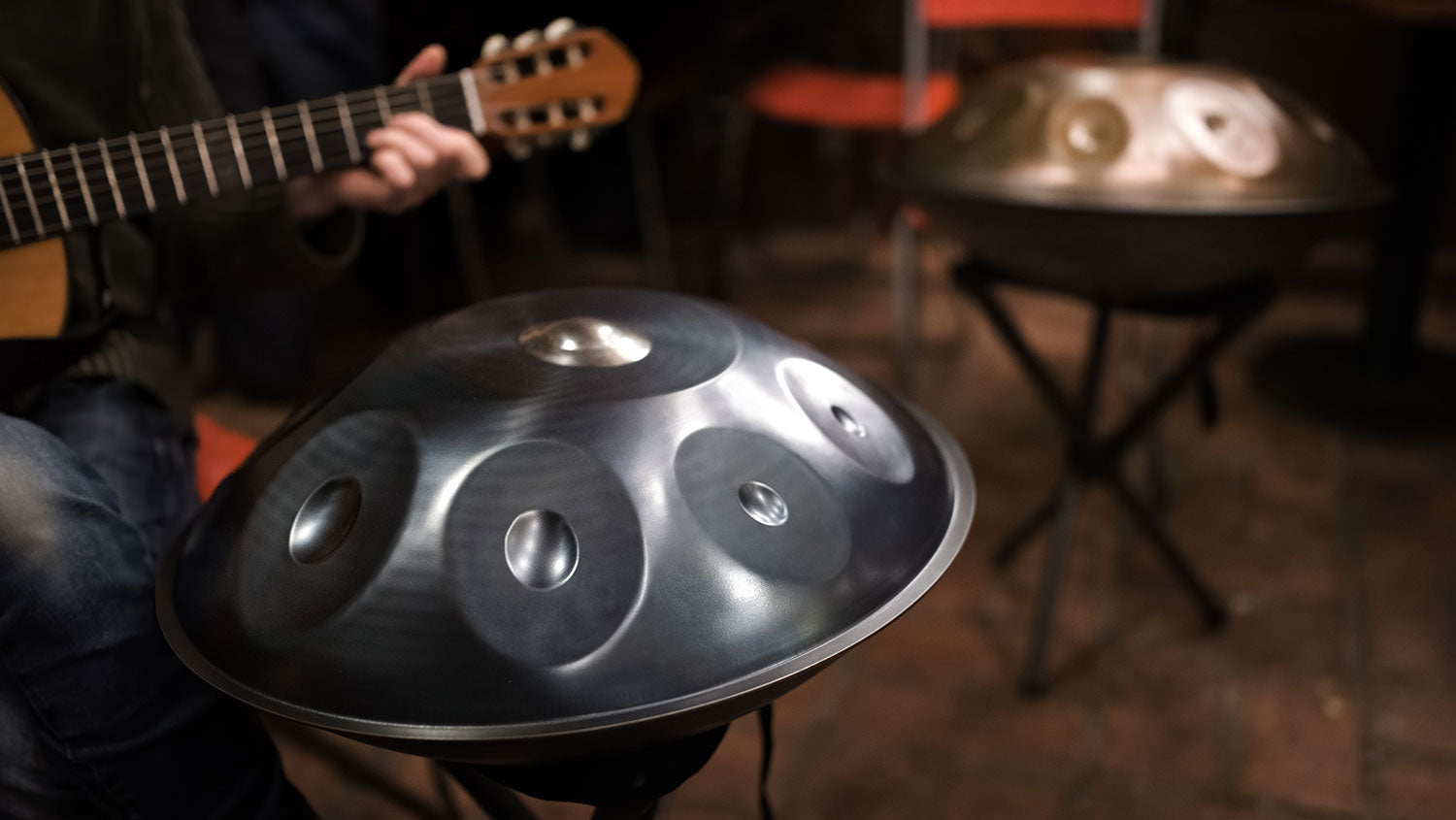
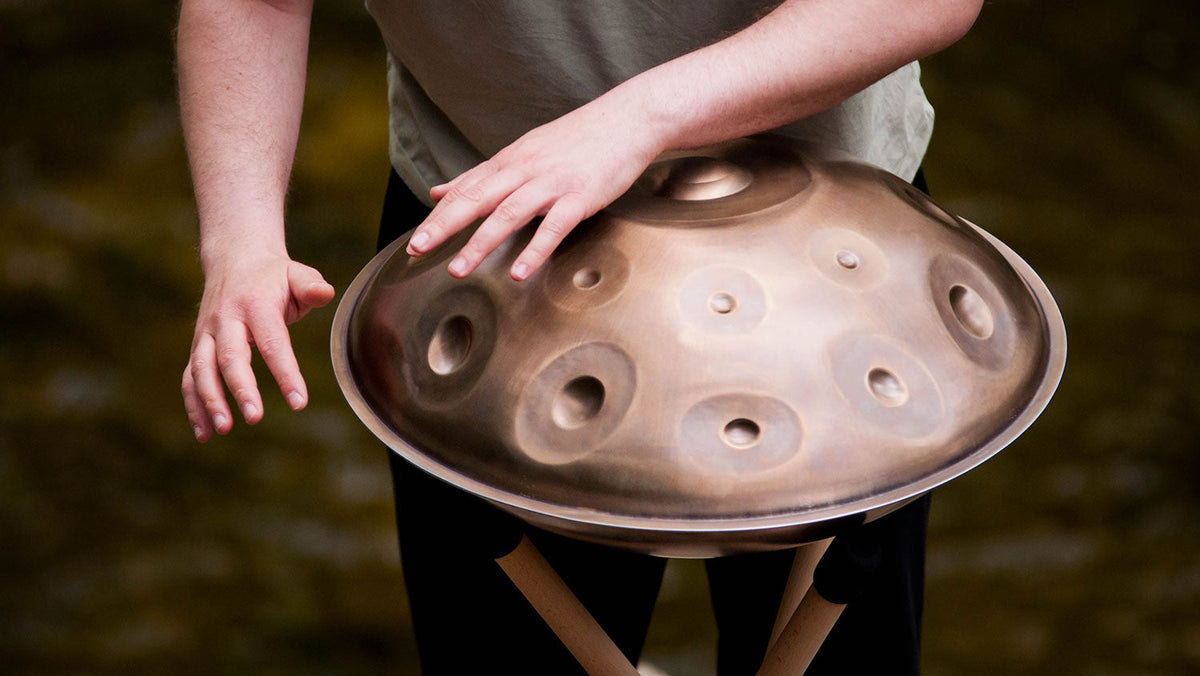
A handpan is a melodic percussion instrument consisting of two circular metal shells joined together. The upper shell has several notes distributed in a circle (usually between 8 and 10) around a central note called the Ding. The lower shell usually has no notes, but some models - called bottom notes - do have them; however, all models have a hole, called the Gu, located in the lower shell, from which the sound of the instrument comes.
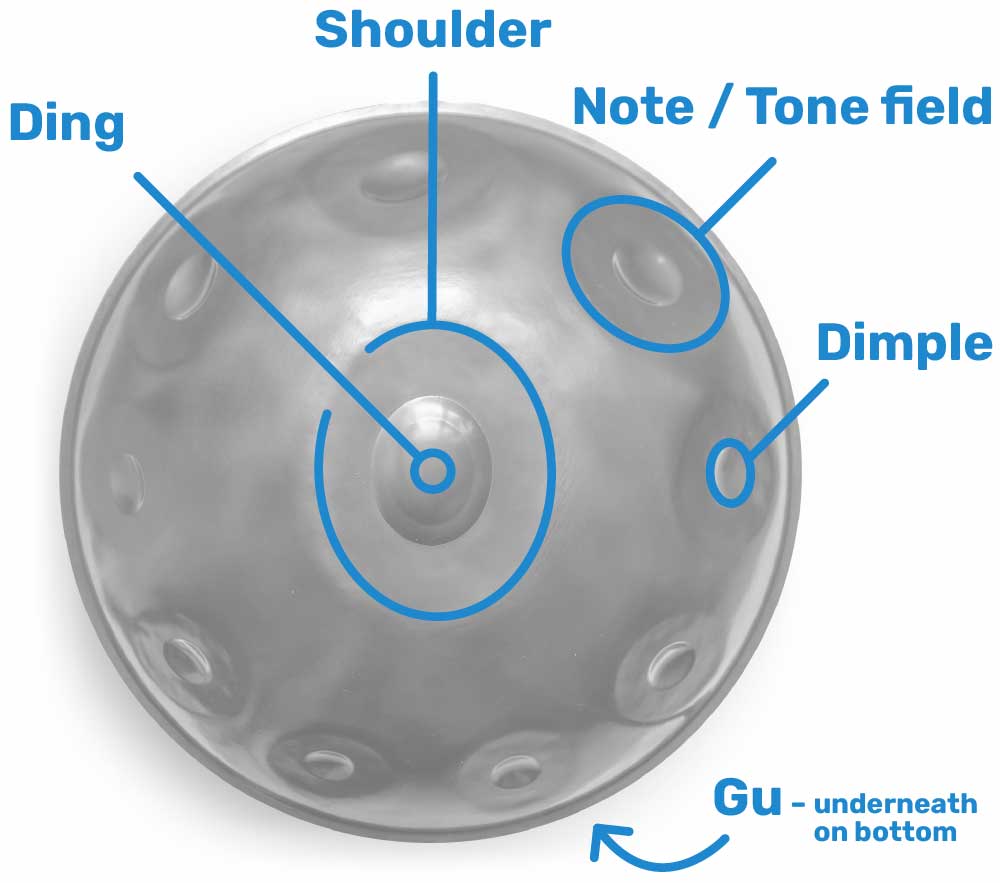
Unlike the piano, where all notes are available, the handpan is limited to a few notes. While the Hang® by PANArt (which inspired the modern handpan) was built with 8 or 9 notes, there are now also manufacturers who build handpans with over 30 notes. However, on a handpan, the notes are not arranged as on a piano, where one semitone follows the next, but the notes jump several octaves. How many and which notes are used determines the scale of the handpan. See our guide to handpan scales for more information on this topic.

The notes in the outer circle are arranged in a zigzag pattern from bottom to top.

Some differences to bear in mind
Unlike steel tongue drums, which have cut tongues, the handpan has a seamless, fully moulded and hammered surface. This gives it a richer, more sensitive tone and longer sustain.
Many beginner musicians still use the term “hang drum”. In reality, the Hang® is the ancestor of the handpan, and the term “drum” is ambiguous. You can learn more about the origins of the handpan in our dedicated article, but in any case, it is necessary to be clear: the handpan is not a drum.
Define your expectations: relaxation, performance, therapy or simple pleasure
Before choosing an instrument, first clarify how you want to use it. A handpan can accompany a personal moment of relaxation, support a yoga session, enrich a therapeutic process, or be played in concerts or duets with other musicians. Your intended use will influence your purchasing decisions: the required sound intensity, harmonic richness, type of sound scale, sustain, and sometimes even the material.
Some examples of projects:
- Personal relaxation: long sustain, gentle melodic scale and moderate volume;
- Yoga or sound therapy: stable tone, calming harmonies, pronounced expression of low notes;
- Concert or group: clear sound, tuning precision, frequency compatibility;
- Creative exploration: intuitive melodic scale, versatile format.
Technical characteristics handpans to consider before purchasing
Some pages on our website already provide detailed information on each criterion. This section summarises the key points so you can quickly understand how to make your decision.
Main criteria:
- Material
- Number of notes
- Musical scales
- Frequency
- Format and structure
The role of steel, number of notes and format
When discovering the world of handpans, three elements immediately influence the way you play and how the sound is produced: the material (nitrided steel, stainless steel or ember steel), the number of notes and the way the instrument is structured (format). Here is a simplified version to quickly understand how these parameters actually influence your purchasing decision:
- Nitrided steel: a material highly appreciated for its clear and sharp tone. It is quite responsive when played as a percussion instrument. It offers clear articulation of notes, ideal for musicians who enjoy playing rhythms or have a more present sound.
- Stainless steel: it is characterised by a long, enveloping sustain, perfect for meditative atmospheres or relaxation. Soft, stable and easy to maintain, it is often the material of choice for those looking for a durable instrument with a relaxing sound.
- Number of notes: the more notes a handpan has, the greater your musical possibilities. This gives you more melodic possibilities, but also means more delicate tuning for the manufacturer and a potentially more challenging instrument for the musician to master. For a first purchase, a balance between simplicity and richness of sound is generally preferable.
As for the size of the handpan, this affects the sound, portability and sometimes the level of difficulty. We find:
- Handpan "classic" (8-10 note): the most versatile, ideal for beginners looking to progress;
- Mini handpan: more compact and lightweight. It is perfect for experimenting and easy to transport; ideal also for children.
- Mutant handpan: instruments with additional advanced notes (floating notes, combined notes, etc.).
- Handpan with bottom notes: Bottom notes add depth, relief and richness to the tone. They require very precise tuning and increase the price of the instrument. They are designed for experienced musicians looking for a wider variety of sounds.
Handpan frequency: the importance of compatibility
The handpan is primarily tuned to 440 Hz or 432 Hz:
- 440 Hz: this is the international standard, essential if you play with other musicians;
- 432 Hz: this is a more personal choice that is often associated with relaxation. However, it is not compatible with instruments tuned to 440 Hz.
| Frequency | Ideal for | Limitations |
| 440 Hz | to play in a band or concert | Less immersive |
| 432 Hz | relaxation, yoga, playing as a soloist | incompatible with most other instruments |
If you are undecided:
Maintain the freedom to play with other musicians by choosing a frequency of 440 Hz. Do not hesitate to seek advice from an expert before purchasing if you have any doubts, especially if this is your first instrument. Contact us for answers to your questions.
Melodic scales and sound atmosphere
The sound scale is the heart of the handpan. Each instrument is tuned to a single scale, which defines its emotional atmosphere and musical possibilities. It is important to choose a melodic scale that suits your taste and level.
We recommend that you refer to this comprehensive guide to handpan scales.
Examples of typical sound scales
| Types of scales | Musical atmosphere | Examples |
| Minor | introspective, meditative | Kurd, Celtic |
| Major | engaging, joyful | Ionian |
| Exotic | mysterious expressive | Hijaz, Pygmy |
How to distinguish a good handpan from a poor-quality one
- The most important characteristic of a handpan is that the notes are accurately tuned and, if handled correctly, the handpan should not lose its tuning for at least 2 years.
- In addition to a note's fundamental tone, each note has two other tuned harmonics, the fifth and the octave. Therefore, a tonal field consists of three notes.
- There is no unwanted interference between notes, i.e. the notes are well ‘isolated’ from each other and one note does not activate the adjacent note. This must be distinguished from ‘intentional note interference’, where, for example, a note one octave lower (e.g. C3) activates the same note one octave higher (e.g. C4). Some people find intentional note interference pleasant, while others find it annoying. Sound is a matter of taste!
- Every note on the outer circle should sound the same regardless of where you strike it (except in the centre, on the “dimple”).
- The top and bottom of a handpan are glued together. Some manufacturers use a quick-drying glue, but this can come apart quicker than a softer more durable glue that takes several days to dry.
Price, market and value for money of a handpan
The handpan market has rapidly changed. In 2012, there were 30-40 handpan manufacturers; today, there are more than 300. This has made handpans more accessible. You no longer have to wait years or spend thousands of pounds to own a good handpan.
Most handpans come from Europe or Asia. The latter are typically cheaper, although the average quality is slightly lower. However, there are some Asian manufacturers, with whom Sound-Sculpture collaborates, who have managed to keep up with the quality of European makers.
When ordering an instrument, it is important to bear in mind that it will need to be maintained. Like a piano, a handpan needs to be serviced, repaired or retuned periodically. This can become more expensive if there is no local retuning service available. The handpan would have to be shipped back and forth (through customs) to Asia.
The handpan market is very diverse, with handmade, industrial, low-end and high-end instruments available. Prices mainly reflect the time taken to produce the instrument, the quality of the steel, the precision of the tuning and the reputation of the manufacturer.
What influences the price of a handpan?
A handpan's price reflects the time spent crafting it, the technical difficulty involved, and the level of expertise required to produce a stable, harmonious and durable instrument. Understanding what really influences the price allows you to distinguish a fair price from a misleading offer. Here are the main factors that influence the price of a handpan:
| Element | Impact on price | Explanation |
| Number of notes | ++ | The more notes the instrument has, the more delicate the tuning. Each new note must harmonise with the others, which requires considerable adjustment time. |
| Presence of low notes | +++ | Lower notes require a long and complex process. |
| Tuning Quality | ++ | Precise tuning requires several steps, careful adjustments and a wealth of experience. |
| Manufacturer reputation | +++ | Recognised craftsmen invest in training, sound research and customer service. Their experience drastically reduces the risk of defects. |
A very cheap handpan almost always hides significant trade-offs: unstable notes, unbalanced sustain, excessive interference, poor-quality steel, or even a lack of retuning service.
Some considerations for making your first purchase with peace of mind
Each craftsman, material and configuration can affect the price. However, it is useful to have some indicative price ranges as a guide:
- low-quality handpan: from £ 800 to £ 1,200
- mid-range handcrafted handpan: from £ 1,200 to £ 1,700
- high-end (low notes and mutants): from £ 1,700 to £ 4,400 and above.
Support and Retuning
A good handpan is not just about sound: it's also about reliable after-sales service! An instrument naturally tends to go out of tune over time, hence the importance of a retuning service. A reliable manufacturer or shop will always offer a local or assisted retuning service to ensure the longevity of your instrument.
Why are there large price differences between different handpans?
- Tone, sound quality and tuning: Some handpans have a unique tone (sound) and very good, stable tuning, which is also reflected in the price.
- Number of notes: the more notes a handpan has, the more expensive it is. A handpan with many notes is more difficult to balance and avoid note interference. That is why there are only a few manufacturers who build good mutant handpans or handpans with many bottom notes.
- A handpan with very low notes is more expensive than one tuned to higher notes. Lower notes need to be tuned for longer because the tonal fields are wider.
- The thickness of the material: most manufacturers use a material thickness of 1.0 mm, only a few use 1.2 mm. Thicker material is more difficult to hammer and therefore usually more expensive. Take into account most people find the sound of 1.2 mm steel softer.
- After-sales service: unfortunately, the service provided by many handpan sellers is not reflected in the price. Many online shops and music shops often do not offer a retuning service in case your instrument goes out of tune or needs repair.
Where to buy a handpan: retailers, trial instruments and warranties
Compare purchases made from a craftsman, a specialist business and online
The craftsman offers a direct relationship and unique instruments, but the wait times can sometimes be very long. In a specialty business or online, you will benefit from a wide selection of instruments, trial instruments, rental services, personalized purchasing assistance, and centralized after-sales service.
Sound-Sculpture falls into the “specialized store + online” category, with the option to try out and rent a handpan. If you decide to purchase your handpan after renting it, we will refund 100% of the rental cost towards the purchase price!
Services that guarantee a good purchase
Rent before you buy, money-back guarantee, exchange policy, transparent return conditions—these services greatly reduce the risks associated with a first purchase.
Remember: at Sound-Sculpture, we offer a 14-day money-back guarantee and the option to exchange your handpan for another model within 30 days!
How to evaluate a seller or an ad for second-hand tools
Buying a used handpan can be a great deal, but only if you know how to identify a reliable seller and a serious ad. Here are the essential points to check before buying.
Verify the seller
A good seller will readily provide photos, videos, information on the frequency of notes and the general condition of the instrument. The history of the instrument should be clear: date of purchase, original manufacturer, maintenance log (if applicable), repairs carried out. Give preference to sellers who are active in a community (musicians' groups, forums, dedicated networks).
Analyse the instrument
Request a recent video in which you can hear each note played slowly and individually.
Review the advertisement
Be wary of an instrument whose price seems too low for its scale or manufacturer.
Warning signs that should not be ignored:
- despite your request, no video is shown;
- blurry photos, limited photos, or photos clearly taken from another site;
- prices that are too low without technical justification;
- refusal to meet in person, especially for an expensive instrument;
- advertisement that is too generic or full of errors.
Developing a long-term purchasing strategy for handpans
The decision to purchase a handpan is not only limited to the first instrument. It is often the beginning of a musical journey that lasts several years. Therefore, it is necessary to plan your purchases in advance.
Plan your first purchase without rushing things
| Stage | Action | What to do to move on |
| 1 | Watch videos | Learn how to play in handpan workshops |
| 2 | Try | Try Handpans |
| 3 | Rent | Rent a handpan |
| 4 | Choose a versatile instrument | Purchase a handpan |
Upgrading to a second handpan and musical evolution over time
With experience, many musicians naturally feel the desire to expand their musical possibilities. After a few months or years of practice, it becomes easier to identify what is missing from the first instrument. You may want a second scale to vary the musical atmospheres, background notes for more depth, or even a handpan made of a different material to explore a different tone.
The idea is not to buy more, but to buy better, based on your actual feelings, your playing style, and your needs, which change over time. Here is a timeline showing how your musical journey could change over a 24-month period:
- 0 to 3 months: discovery, trial, choice of an intuitive sound scale
- 6 to 12 months: desire for a second complementary instrument
- 12 to 18 months: addition of bottom notes or a different steel handpan
- 18 to 24 months: rearrangement, advanced exploration.
All these steps can be followed thanks to Sound-Sculpture services.
Consider the resale value in your purchasing strategy
It is common for musicians to want to resell their first handpan to finance an instrument that is more suited to their level or musical desires. To preserve maximum resale value, it is essential to keep all proof of origin: invoices, demonstration videos and tuning history. It is also necessary to:
- keep the original packaging and accessories;
- regularly maintain the instrument (gentle cleaning, protection against humidity);
- have it inspected by the manufacturer, a specialist shop or a craftsman (certified tuning, professional maintenance);
- document the instrument’s condition (demonstration videos, photos, inspection log).
Handpan Maintenance
Let's look at some precautions you can take to ensure the protection and longevity of your handpan.
Things to do and not to do with your handpan
When handling the instrument, it is necessary to pay attention to certain aspects:
Avoid heat
It is important to protect your handpan from direct sunlight, i.e. do not leave it in the sun. If it gets too hot, the handpan may go out of tune. If it does overheat, make sure you let it cool down to room temperature before playing and check that it is still in tune.
Use only your fingers
Do not use sticks or other objects to play your handpan, just use your fingers! It is best to wash your hands before playing. Dirt and sweat are harmful to the instrument and can cause it to rust.
Avoid moisture
You must protect your handpan from moisture. If it gets wet, dry it immediately with a cloth and then oil it. Please note these precautions are not necessary if your handpan is made of stainless steel!
Remove jewellery
Remove rings, watches and other jewellery from your hands to avoid scratches.
Use the bag only for transport
Do not store the instrument permanently in a bag or rucksack, but only for transporting; otherwise there is a risk of rust.
Take care of your handpan
Depending on the manufacturer or material, the handpan must be oiled to protect it from rust.
Position it correctly
Never place the handpan on the floor with the notes facing downwards.
Pay attention to the sound
Since handpans are made of steel, the sound may change depending on the temperature. When cold, the metal contracts and the tones become higher; when warmer, the metal expands and the tones become duller.
Show your instrument some love
Play it regularly and take care of it!
Transport and protection of the handpan
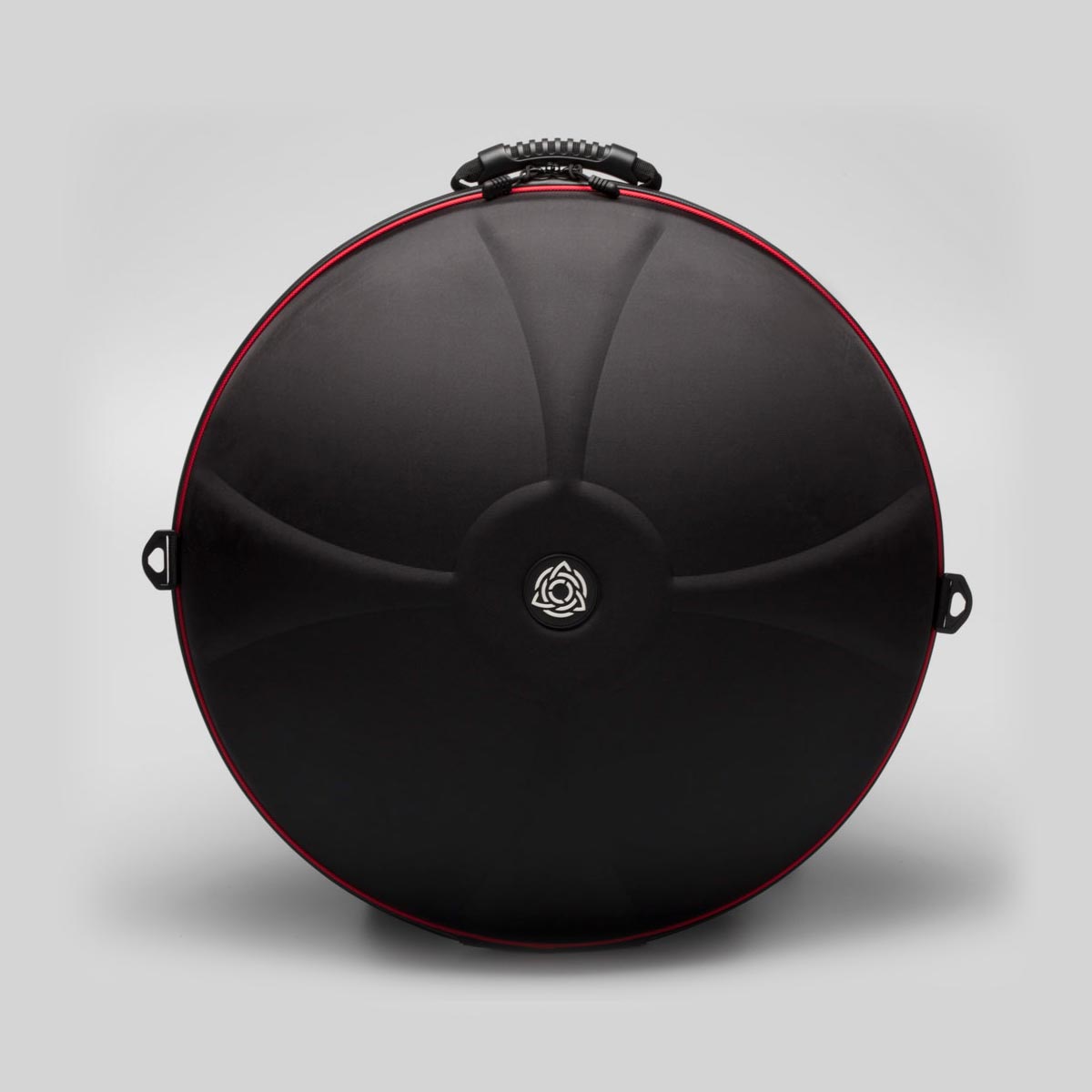
When purchasing a handpan, you should also find a suitable case to transport it. Hard or soft cases are suitable for this purpose.
As the name suggests, your instrument is better protected from impact in a hard case than in a soft one. The soft case has the advantage of being cheaper, lighter and more convenient to carry. When making your decision, you should consider how often you will be touring with your instrument and what “conditions or stresses” it will be exposed to.
For simpler transport, a soft case is much more convenient. However, when travelling by plane as hand luggage or on a crowded underground train, a hard case is more suitable to ensure better protection. Take a look at our protective cases for handpans!
In addition, almost all steel handpans require regular maintenance to protect them from rust. Most manufacturers recommend Phoenix handpan oil, coconut oil or even baby oil.
As a rule, you should rub the top and bottom of your instrument with a care product and a microfibre cloth every 2-4 weeks. We also recommend cleaning the instrument with the same microfibre cloth after each performance to remove sweat and dirt.

FAQ
For a good first instrument, consider between £ 800 and £ 1,700. The price varies depending on the number of notes, the materials, the sound scale and the reputation of the manufacturer.
Most beginners choose a handpan in the classic format with 8-12 notes (simple, intuitive and fairly versatile).
Trying it out is ideal, but not essential if you can benefit from high-quality videos, personalised advice or rental services.
Typical signs of a poor-quality handpan are unstable notes, detuned notes, excessive note interference, chaotic sustain and imbalance between notes.
No, all handpans lose their tuning slightly over time. The key is to have a reliable retuning service such as that offered by Sound-Sculpture.

About the author

Founder and managing director of Sound-Sculpture, handpan expert
Related articles
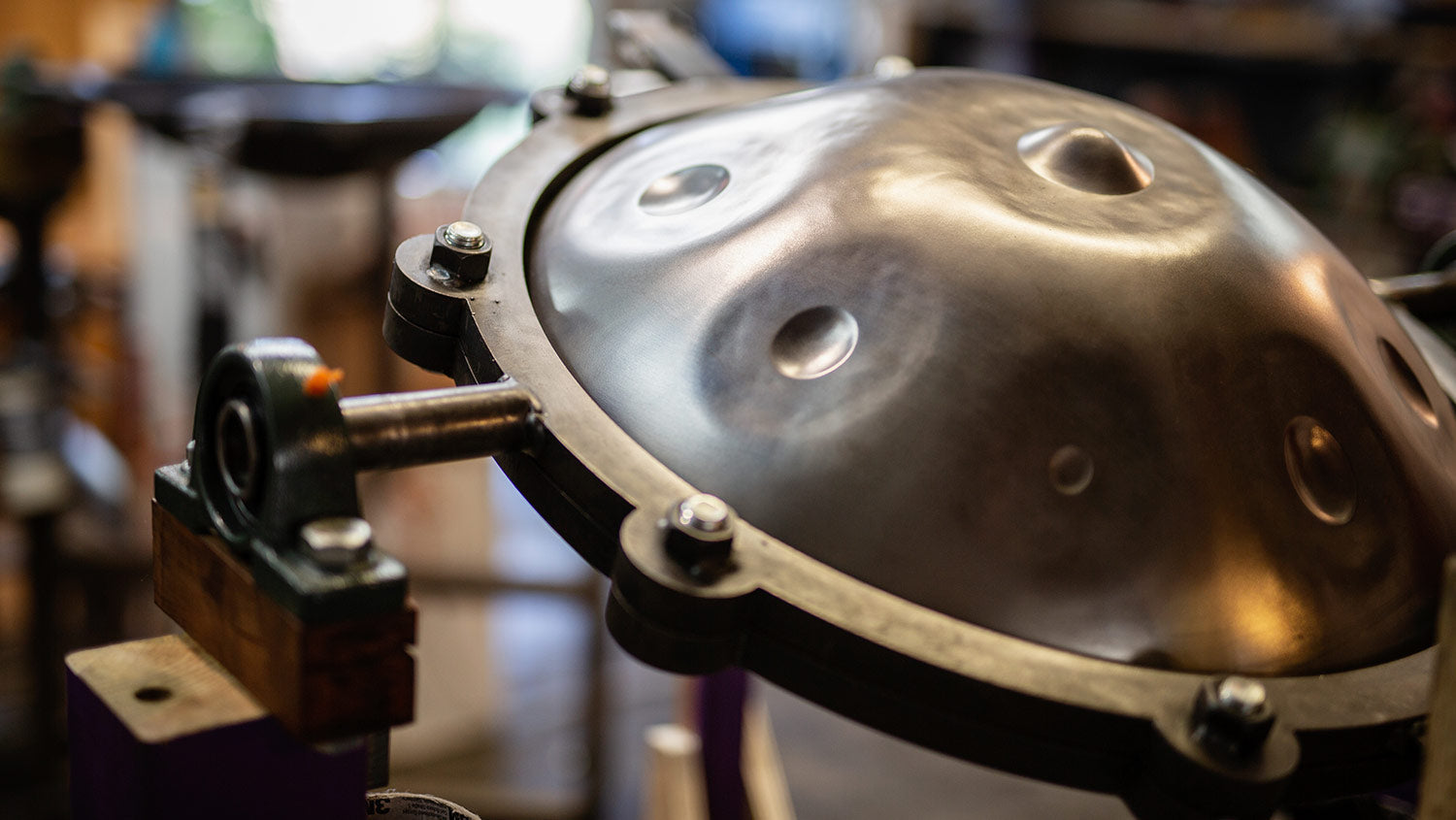
Handpan tuning: how does it work?
Discover how a handpan is tuned: expert techniques, high quality tools and all you need to understand how your instrument has been built or can be restored!

Handpan musicians: 10 artists redefining the instrument
Discover 10 handpan musicians pushing the boundaries of this remarkable instrument, from viral pioneers to UK street performers shaping the modern scene!
Letter notation vs Solfege: a guide for the modern music
Confused by Do-Re-Mi vs A-B-C? Discover the differences between solfege and letters, their history, and why handpan players prefer one over the other.
Major scale vs minor scale: the complete beginner's guide
A guide for beginners on major scale vs minor scale: learn how their patterns work and which one suits your handpan playing style.