

The ultimate guide to travelling safely with your handpan
Learn how to travel safely with your handpan. Discover airline carry-on tips, flight hard cases, temperature protection, and humidity care with Sound-Sculpture.

Table of contents
Travelling with a handpan is undeniably nerve-racking. Weighing 7–20 lb (3–9 kg) and usually measuring 21–22 in (53–56 cm) in diameter, the handpan occupies a challenging middle ground between standard luggage and oversized cargo. Because a single sharp impact or severe dent can permanently ruin the harmonic alignment of its delicate tone fields, taking your instrument on the road, on trains, or through airport security requires an effective proactive strategy. Knowing how to travel with your handpan safely ensures your instrument arrives in perfect tune. This guide offers you comprehensive advice on flight cases, transit logistics, airline negotiation, temperature and humidity handling.
Choosing the right case before you pack
Selecting a case is the most critical decision you will make before heading out the door. The internal foam, outer rigidity, and seam seals determine whether your handpan survives drops, baggage stacking, or heavy rain. Avoid picking a case based on weight alone; match the gear directly to how you plan to travel. To explore protective options, browse our full range of handpan bags.
Hard flight cases: maximum protection for hold travel
If your instrument might end up in an aircraft hold or underneath heavy equipment in a van, a rigid flight case is essential. Purpose-built hardshell cases made from heavy-duty plastics or fibreglass keep the instrument safe from extreme pressure.
The single most important thing to look for is how the case holds the instrument. A well-designed case supports the handpan on its rim seam, the welded edge running around the equator of the shell, and leaves the tone fields and the ding untouched. Dense interior foam that cradles that rim means an impact on the outside of the case is absorbed by the shell, not transmitted into the tuned areas. Beyond that, look for a shock-absorbing layer such as EVA foam, secure latches that cannot spring open under stacking weight, and shoulder straps strong enough to carry the combined weight for real distances.
Soft padded bags: viable for cabin travel only
Soft padded bags make walking easy, which suits local commuting or guaranteed cabin travel. However, soft bags offer no structural defence against heavy compression. Even bags built with thick foam layers cannot stop a shell from crushing under heavy weight in a tight baggage compartment. Use soft bags only when you keep physical control of your instrument throughout the trip.
Key dimensions and weight limits to check before travel
Standard handpan cases measure roughly 23–26 in (58–65 cm) in total diameter, with a depth of 11–14 in (28–35 cm). Cabin baggage limits vary considerably: the strictest low-cost carriers allow around 22 × 16 × 8 in (55 × 40 × 20 cm), while full-service airlines typically go up to 22 × 18 × 10 in (56 × 45 × 25 cm). Because an encased instrument exceeds all of these, measuring your packed bag before booking is mandatory. Total weight comes to 15–31 lb (7–14 kg) once the instrument is inside its case, which usually fits within cabin or hold allowances but requires verification against budget carrier rules.
| Case type | Average weight | Ideal transit method | Protection level |
| Soft Padded Backpack | 4.4–7.7 lb (2.0–3.5 kg) | Walking, cars, trains, cabin overhead lockers | Moderate impact / Low compression |
| Hybrid Semi-Rigid Case | 8–11 lb (3.5–5.0 kg) | Commuting, bus travel, guaranteed hand baggage | High impact / Medium compression |
| Heavy-Duty Hard Flight Case | 12–19 lb (5.5–8.5 kg) | Aircraft cargo holds, touring vans, long-distance freight | Maximum impact / Complete crushproof |
Road trips and public transport
Ground travel presents daily physical hazards that require simple habits. From sudden vehicle braking to crowded train carriages, protecting your handpan during local transport keeps it safe before you ever reach an airport.
Transporting your handpan by car: boot safety and positioning
When packing a handpan into a car, never leave it free to slide across the boot. Sharp turns or sudden braking can send the case slamming into metal walls, putting stress on the tuned steel. The safest spot in a car is wedged firmly on the floor behind the front passenger seat. This placement prevents movement completely. If you must use the car boot, lay the case flat and secure it with cargo nets or pack soft luggage around it. Never stack heavy suitcases or sharp objects on top of your handpan case.
Trains and buses: navigating crowded spaces with a backpack case
Navigating busy train platforms and buses requires constant awareness of your surroundings. When wearing a handpan backpack, remember that the instrument extends far behind your shoulders. Turn slowly in narrow aisles to avoid bumping the rim seam against metal poles or doors. On crowded trains, remove the backpack and hold the case by its top handle near your legs. Avoid placing soft handpan bags in high racks on buses where heavy items might shift and fall during the ride.
Flying with a handpan: airline policies and cabin vs hold
Bringing a handpan onto an aeroplane remains the most challenging part of instrument travel. Because policies vary across airlines and gate agents make final decisions on the spot, preparation and polite conversation are your best tools.
Handpan as hand baggage: size and overhead locker tactics
Securing a spot in the cabin overhead locker is the safest path. To increase your chances, try these practical tactics:
- Book priority boarding: boarding early will not guarantee you a space, but it means you reach the lockers while they are still mostly empty, which is usually the difference between a yes and a no
- Position it properly: lay the handpan flat or sideways in the overhead locker, so that nobody can drop a heavy bag on top of a soft case
- Choose larger aircraft: whenever possible, fly on main fleet aircraft (like Airbus A320 or Boeing 737 models) rather than regional turboprops, as smaller jets have tighter locker dimensions
Budget carriers: what to expect
Budget airlines strictly enforce cabin baggage sizes and use metal sizing frames at boarding gates. Most low-cost carriers offer no special instrument rules for larger items. If your case exceeds the sizer, staff will send it to the hold. When flying with low-cost airlines, pack the handpan in a rigid case so it can travel safely in the hold.
Buying an extra seat is sometimes suggested, and some airlines do offer it, but check carefully before booking: a cabin seat baggage item normally has to be secured with the seatbelt and meet a defined shape and weight, and several carriers will not accept a round case on a seat at all. Confirm it in writing rather than assuming.
Checking a handpan into the hold: risks and how to reduce them
Checking an instrument into the hold exposes it to conveyor drops, stacking weight, and rough handling. If you must check your handpan, make sure it sits inside a rigid, foam-lined flight case. Before handing it over, double-check that all latches are closed and photograph the case at the desk.
One word of caution about fragile labels. A "fragile" sticker carries very little practical weight with ground handlers, and at some airlines accepting fragile or special handling status means signing a limited release, which reduces or removes the carrier's liability for damage. That is the opposite of what you want. Read what you are being asked to sign, and if a limited release is the condition for accepting your instrument, make an informed decision rather than an automatic one!
How to communicate with airlines before your flight
- Call customer service at least 48 hours before departure to log your instrument, and ask for written confirmation of the airline's rules on carrying instruments in the cabin. Print a physical copy for gate staff, because the person at the gate rarely has time to look up a policy and a printed email settles the conversation quickly.
- Arrive early, at least three hours before international flights. An early check-in gives agents time to find solutions without departure stress.
Temperature and humidity in transit
Steel responds to its environment. Temperature changes shift the pitch of a handpan temporarily, and trapped moisture is what actually causes lasting damage.
Temperature: what really happens to a handpan in a hot car or a cold hold
Steel expands in heat and contracts in cold, and its stiffness changes slightly with temperature. Because the pitch of a tone field depends on that stiffness, a handpan sounds marginally flatter when it is hot and marginally sharper when it is cold, by roughly a fifth of a cent per degree. A 30 degree swing is therefore worth around five or six cents: audible to a trained ear, and entirely reversible once the instrument returns to room temperature.
The real risk in both cases is condensation, which is covered below. Still, give your handpan half an hour at room temperature before playing it after a journey. It will be in tune, and any moisture on the surface will have had time to evaporate.
Preventing rust and condensation during transit
When an instrument moves from a cold space into a warm one, moisture condenses on the cold steel. Sealed inside a case, that trapped condensation creates ideal conditions for rust. To prevent moisture damage, place two or three silica gel sachets inside your case to absorb moisture from the air, and apply a thin coat of protective handpan oil across the surface before long trips to form a barrier.
Open the case as soon as you arrive rather than leaving it shut overnight. A closed case holds humidity against the steel for hours; an open one lets it go in minutes.
Post-travel cleaning routine
As soon as you reach your destination, open your case and take out the handpan. Inspect the seam, tone fields, and Gu opening for moisture or transit damage. Wipe the instrument with a dry microfibre cloth to remove humidity, oils, and dust. If the steel feels dry, reapply 2 to 3 drops of rust inhibitor oil across both shells. For step-by-step upkeep instructions, consult our guide on how to clean a handpan.
Insurance and handling transit damage
Even with careful preparation, accidents happen. Proper insurance cover and knowing how to file a claim provide financial safety.
Specialist musical instrument insurance: what to look for
Standard travel insurance policies often exclude high-value instruments or cap payouts far below a handpan's value. Secure a dedicated, worldwide musical instrument policy. Ensure your policy specifically covers:
- Loss, theft, and accidental damage during transit
- Unattended vehicle coverage for gear stored in car boots
- Full current market replacement value rather than depreciated value
Reporting damage at the airport: filing a Property Irregularity Report (PIR)
If your handpan arrives at baggage reclaim with visible case crushing, dents, or cracked seams, take action before leaving the customs area:
- Take photos immediately: photograph the damaged case, baggage tag, and instrument while inside the terminal.
- File a PIR report: find the airline’s baggage service desk in the reclaim hall and ask to file a Property Irregularity Report (PIR). Keep a physical copy of the PIR document with its reference code.
- Keep travel documents: retain boarding passes, baggage stubs, and repair estimates from an authorised maker. Airlines will deny claims submitted without an official airport PIR filed on arrival.
Filing on the spot is always best, but it is worth knowing that under the Montreal Convention you have seven days from receiving your baggage to notify the airline of damage in writing. If you only discover the damage once you are home, you have not lost your claim. Keep your boarding passes, baggage stubs and a repair estimate from an authorised maker, as airlines will ask for all three.
Post-Brexit travel: rules for UK players touring the EU
Taking a handpan between the UK and the European Union requires keeping a few post-Brexit customs rules in mind. Fortunately, moving across borders with your instrument remains simple if you follow the correct steps.
If you transport your handpan as accompanied baggage, you do not need an ATA Carnet. Under temporary admission rules, you can clear customs by simply going through the green "Nothing to Declare" channel upon arrival in the EU. However, border officers can ask for proof that your handpan is a personal item rather than a new product intended for resale, so carrying a printed receipt or digital proof of purchase prevents unexpected fines at train stations or border control points.
Furthermore, because handpans consist entirely of nitrided or stainless steel, you are completely exempt from requiring CITES Musical Instrument Certificates (MIC) for protected natural materials at UK-EU borders.
Customs rules change, so check the current UK government guidance before a tour rather than relying on a page you read last year.
Essential travel accessories checklist
Before starting your next trip, check that you have packed these travel items. For a complete breakdown of useful gear, see our guide to the top 5 must-have handpan accessories:
- Flight hardcase or semi-rigid backpack: matches your primary transit method
- Silica gel packets (1.8–3.5 oz (50–100 g)): absorbs trapped moisture inside the closed case
- Protective handpan oil & microfibre cloth: For humidity defence and post-transit cleaning
- Protective rim braid / rope: cushions the rim against knocks during foot travel
- Insurance papers & printed airline confirmations: proof of coverage and written cabin permission
Frequently asked questions about handpan travel
Yes, you can often bring a handpan into the cabin using a soft backpack case, especially with priority boarding. However, because standard cases exceed the usual limits of around 22 × 16 × 8 in (55 × 40 × 20 cm) to 22 × 18 × 10 in (56 × 45 × 25 cm), cabin entry is never guaranteed.
No, and there is no mechanism by which you could. Unlike stringed instruments, handpans are permanently tuned steel shells with no string tension to release. Cabin pressure changes have no effect on them either: the Gu opening in the lower shell means the inside of the instrument is vented, so no pressure difference can build up. Any temporary pitch shift you notice after a flight comes from temperature, not pressure, and disappears as the instrument warms back up.
If gate staff refuse cabin entry, stay calm and ask whether the instrument can travel in the crew coat closet, which is often possible on larger aircraft. If it must go into the hold, photograph the case at the gate before handing it over, check what you are being asked to sign in case it includes a limited release of liability, and inspect the instrument thoroughly at baggage reclaim.

About the author

Founder and managing director of Sound-Sculpture, handpan expert
Related articles

The complete guide to handpan playing techniques for beginners
Master the best handpan playing techniques. Learn proper striking methods, touch styles, sound effects, and daily practice exercises with Sound-Sculpture.
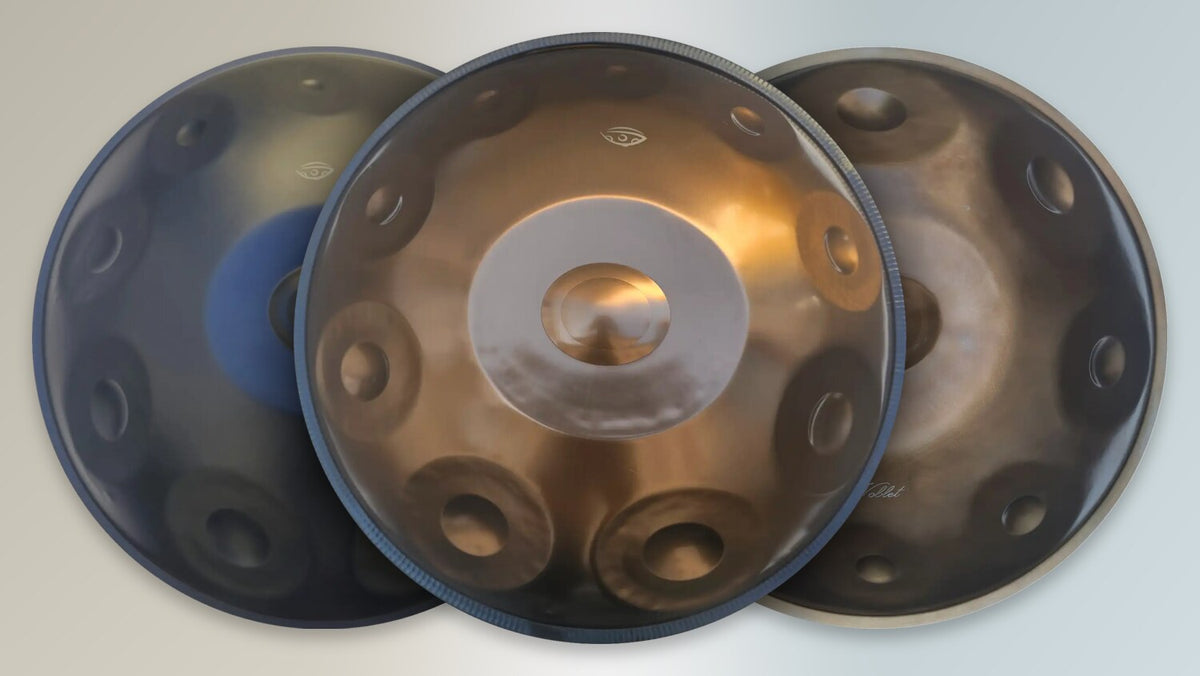
Guide to handpan materials: nitrided vs stainless steel vs Ember Steel
Compare handpan materials. Learn how nitrided steel, stainless steel, and Ember Steel affect sustain, rust resistance, and sound with Sound-Sculpture.
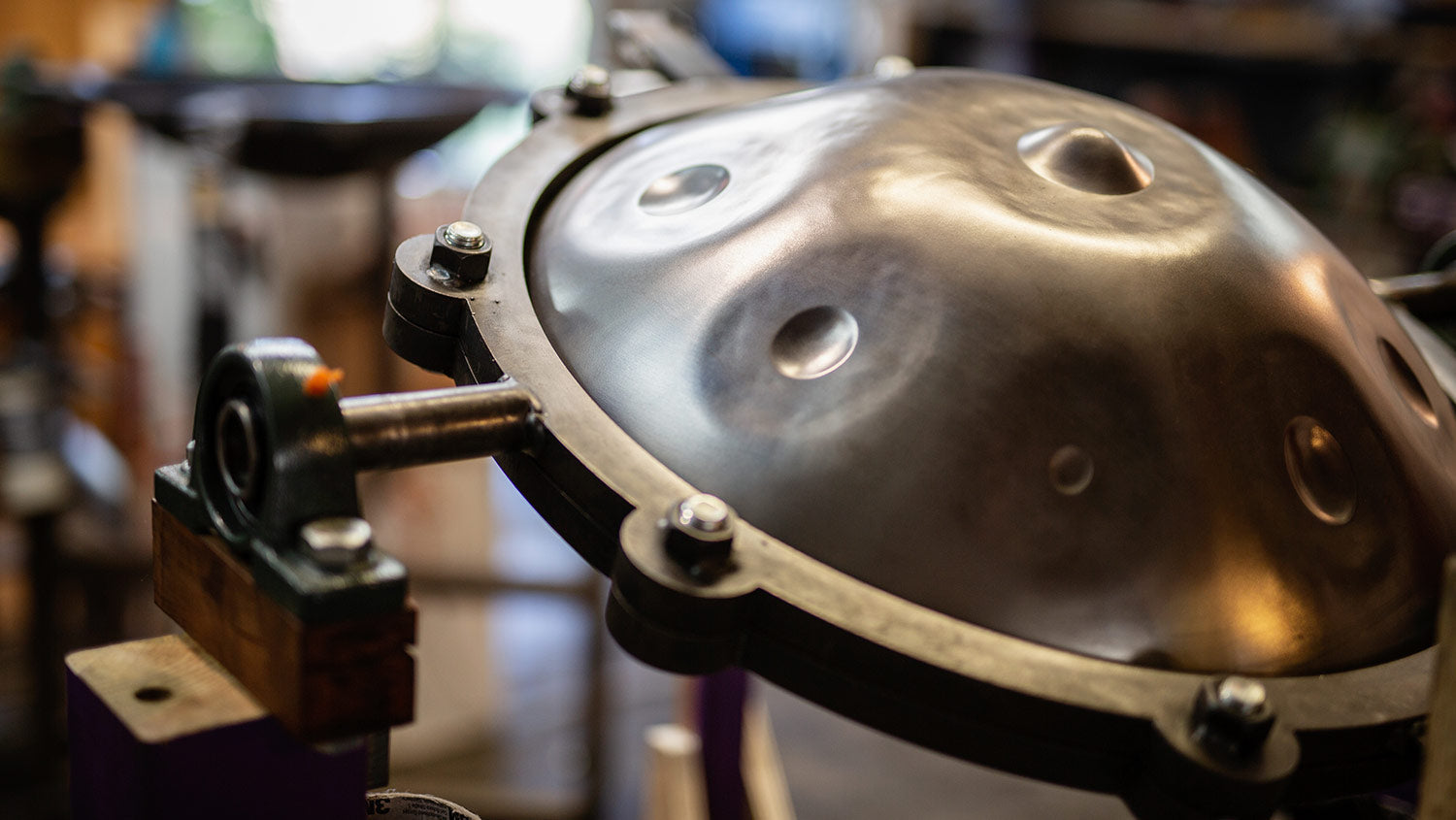
Handpan tuning: how does it work?
Discover how a handpan is tuned: expert techniques, high quality tools and all you need to understand how your instrument has been built or can be restored!

Handpan musicians: 10 artists redefining the instrument
Discover 10 handpan musicians pushing the boundaries of this remarkable instrument, from viral pioneers to UK street performers shaping the modern scene!